
Lake Como Pre-Wedding Film: A Cinematic Save the Date
Maddalena and Alberto didn’t want to send a card.
They’re getting married on 22 May 2027, and rather than announce it on paper alone, they wanted to announce it on film, something their families would actually watch, something that still meant something to them years later. So in June we spent an afternoon and an evening on Lake Como, and made one.
This is how that day actually went: what we filmed, what it cost to get into the gardens, what I got wrong on the boat, and what I’d tell any couple thinking about doing the same thing.
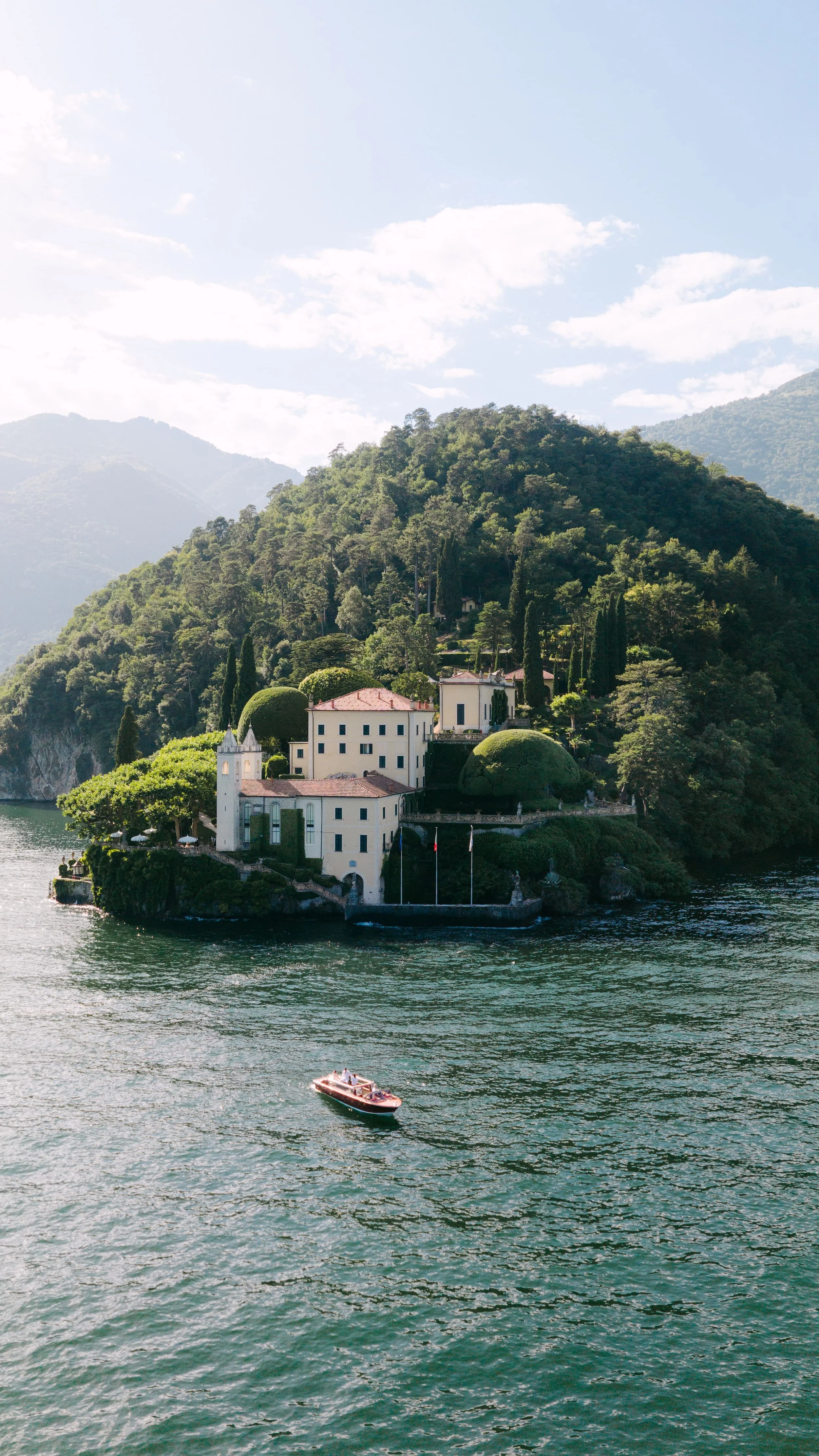
How the film came about
The project came through my friend and longtime collaborator, wedding photographer Elsa Daniel. We’d already been working together for nearly three years by then, which turned out to matter enormously once we were actually on the lake.
We met the way a lot of good things start: she messaged me on Instagram when she was building her wedding portfolio and suggested we shoot something together. We got on immediately, and we’ve kept working together since. Years later, she told Maddalena and Alberto about me.
That recommendation counted for more than any portfolio would have. The couple already trusted Elsa completely, so by the time they reached me the decision was more or less made: if Elsa vouched for the filmmaker, that was enough. Which is a lovely position to be handed, and also a slightly uncomfortable one. I didn’t want to be the weak link in someone else’s recommendation.
Our first video call was a small linguistic pile-up. I’m a native Portuguese speaker, Maddalena speaks some English, Alberto speaks mainly Italian, and Google Translate did a fair amount of the heavy lifting. I’d prepared English phrasing and questions beforehand so I wouldn’t fumble. In the end, Portuguese and Italian are close enough that I kept catching pieces of what Alberto said before the translation caught up, and the whole thing turned funny rather than awkward. We understood each other long before we shared a language.
They also sent me something that raised the stakes: the film of their proposal. It was genuinely well made. They already had a strong visual reference attached to their own relationship, and they had clear expectations. Two things had to appear in the final piece: the words Save the Date, and the date itself.
Why a save the date is harder to film than a wedding
This is the part people find counter-intuitive.
A wedding hands you a story whether you want one or not. There are preparations, a ceremony, speeches, someone’s mother crying, a first dance, a room getting louder as the night goes on. The day has a shape. My job is largely to be in the right place while it happens.
A save the date has none of that. It’s two people, a location, and a few hours. Nothing occurs on its own. There’s no ceremony to build towards and no guests to react. If the film is going to have a shape, it has to come from somewhere else: from how the couple move, how they behave with each other, the progression of the places you take them through, the rhythm of the edit, and eventually the music.
That’s why the project excited me and also why I was tense about it. Nobody is going to save this film for you.
Why Lake Como earns the trip
I should be honest about my own bias here. Lake Como had become a kind of symbolic destination for me, a place I’d watched other photographers and filmmakers shoot on Instagram for years, one of those locations that seems to belong to careers further along than yours. When the job was confirmed I turned to Mathys, who works with me on most shoots and was coming along as my right hand and drone pilot, and said something like: do you realise where we’re going?
It was my first professional shoot outside France. The excitement lasted a few weeks and then quietly turned into pressure: from I can’t believe we’re going to we cannot waste this.
Plenty of places are beautiful. Fewer are useful to film in. What Lake Como gave us, concretely, was range within a single day: the formal gardens at Villa Melzi, then the lake itself and the shoreline we could only reach by boat, then a village where we could put the camera down and let two people have a drink. Three completely different visual environments, close enough together to shoot in one afternoon.
It also gave us scale. In our wide frames, with the mountains rising behind them, two people at the edge of the water read as small without anyone needing to explain it.
Villa Melzi, badges, and relentless sun
We met the couple at the Giardini di Villa Melzi d’Eril in Bellagio at around two in the afternoon.
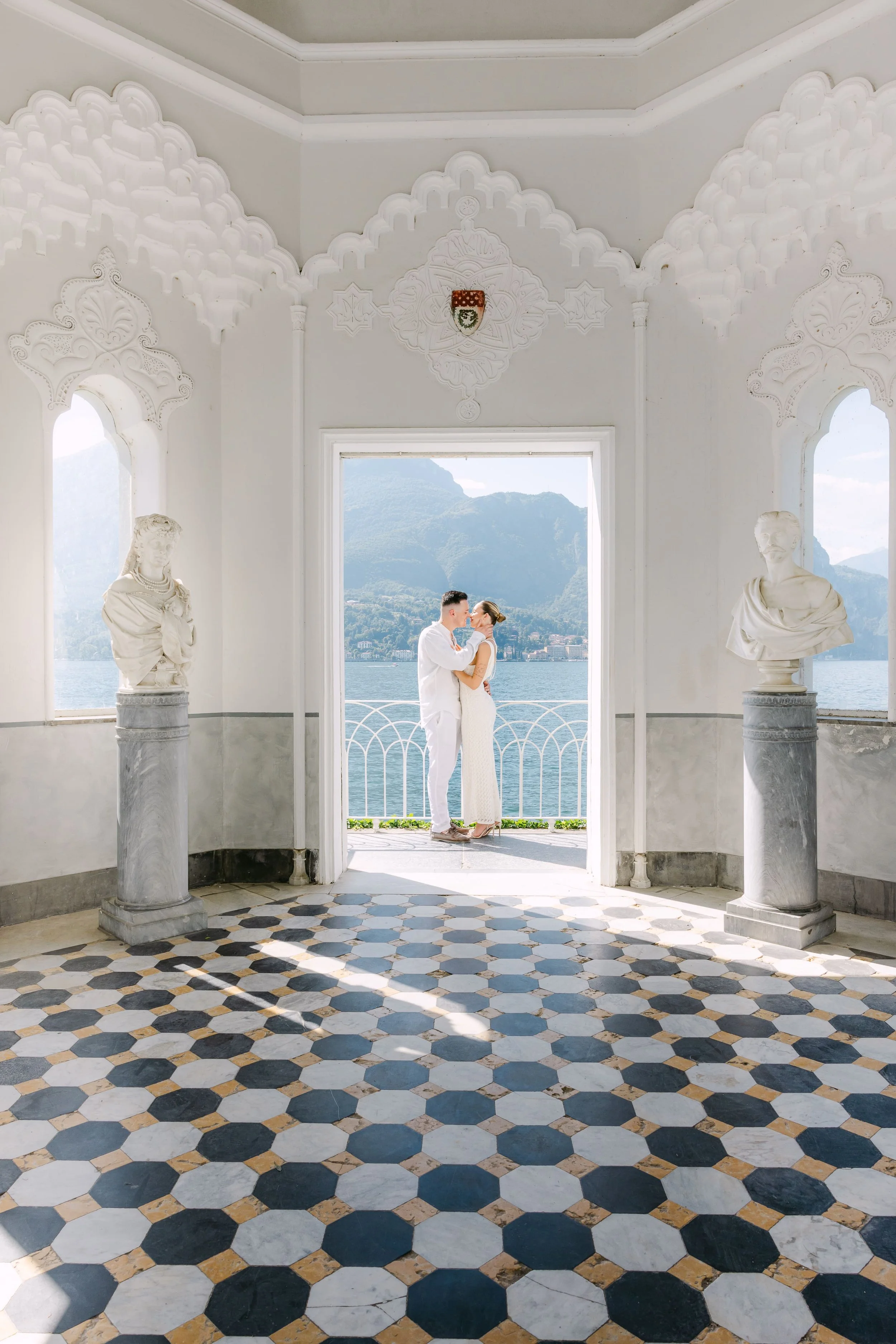
Professional shoots there aren’t something you improvise. Access has to be arranged with the gardens’ management in advance, and for our session the professional photography fee was €427 including VAT. We were given identification to wear while we worked, and I remember the small ridiculous jolt of putting it on: the moment the whole thing stopped being a plan and became a job I was actually doing.
A few things worth knowing before you plan anything there, based on the gardens’ current published conditions: the photography ticket covers the day during opening hours, the photographer’s admission is included but everyone else needs standard admission, you cannot reserve an area exclusively (the gardens stay open and visitors keep walking through your frame), drones are not permitted inside the gardens, and commercial use of the images has to be agreed separately with management, which we arranged for this project. Fees and rules change, so check the official information yourself rather than trusting a blog post from a year ago, including this one.
The weather was the real variable. It was very sunny and very hot, and a lot of the surfaces around the gardens are pale stone that throws light straight back at you. Elsa and I both spent parts of the afternoon squinting at screens we couldn’t properly read. We got through a lot of water and sunscreen, and I still didn’t drink enough. When you’re concentrating on getting a shot, the basic maintenance of being a human being is the first thing to go.
If you’re a couple planning a summer shoot here, bring more water than you think anyone needs. If you’re a filmmaker, put someone in charge of remembering.
Direction, and why documentary doesn’t mean standing back
Elsa and I know each other’s work well, and for the first fifteen minutes it didn’t help at all. We were both feeling the weight of the day and both trying to make sure nothing was missed, which produced a short, very polite traffic jam: sorry, I wanted to do this… no, go ahead… no, sorry, you first.
It sorted itself out quickly. We went back to the moodboard we’d built together before the trip, started talking again, and fell into the rhythm we normally have, where an idea gets passed between photo and video until it’s better than either of us had it alone.
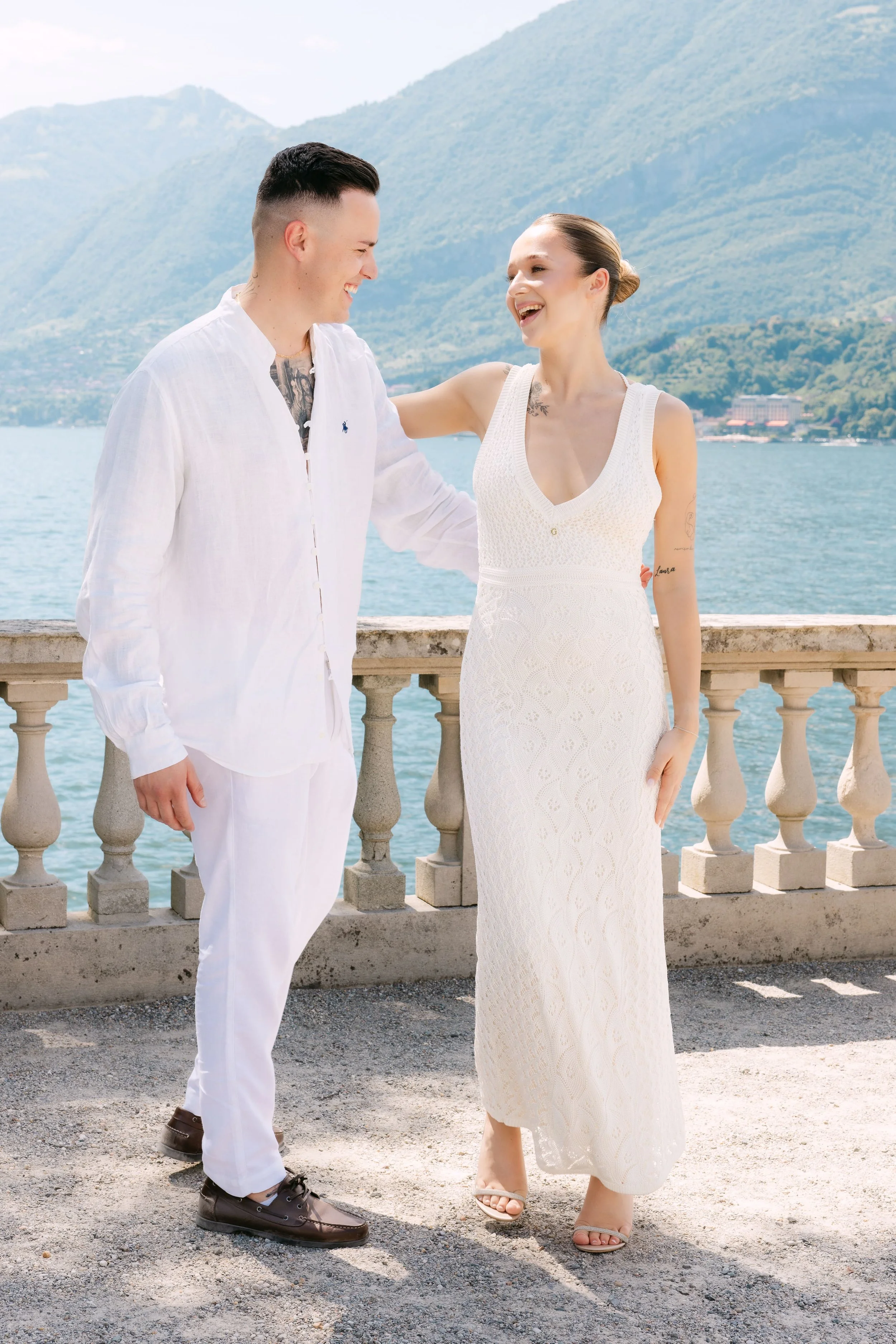
I work in a documentary register, but I want to be precise about what that means, because it’s often sold as something it isn’t. It does not mean I give couples nothing. Maddalena and Alberto are not performers, and left entirely alone in a garden with two cameras pointed at them, nobody behaves like themselves.
So we gave them things to do rather than poses to hold: walk from here to there, talk to each other, tell each other about something that happened, react to whatever the other one says. Actions, not expressions. The laughter in the film is real; it just needed a reason to exist. Elsa would then come in with the more controlled, editorial images she’s very good at, and because the couple had spent the previous ten minutes actually enjoying themselves, even the composed frames didn’t go stiff.
That combination, genuine interaction first and deliberate composition second, is what stopped the film from looking staged, and what stopped it from looking accidental.
Ninety minutes in, the boat arrived
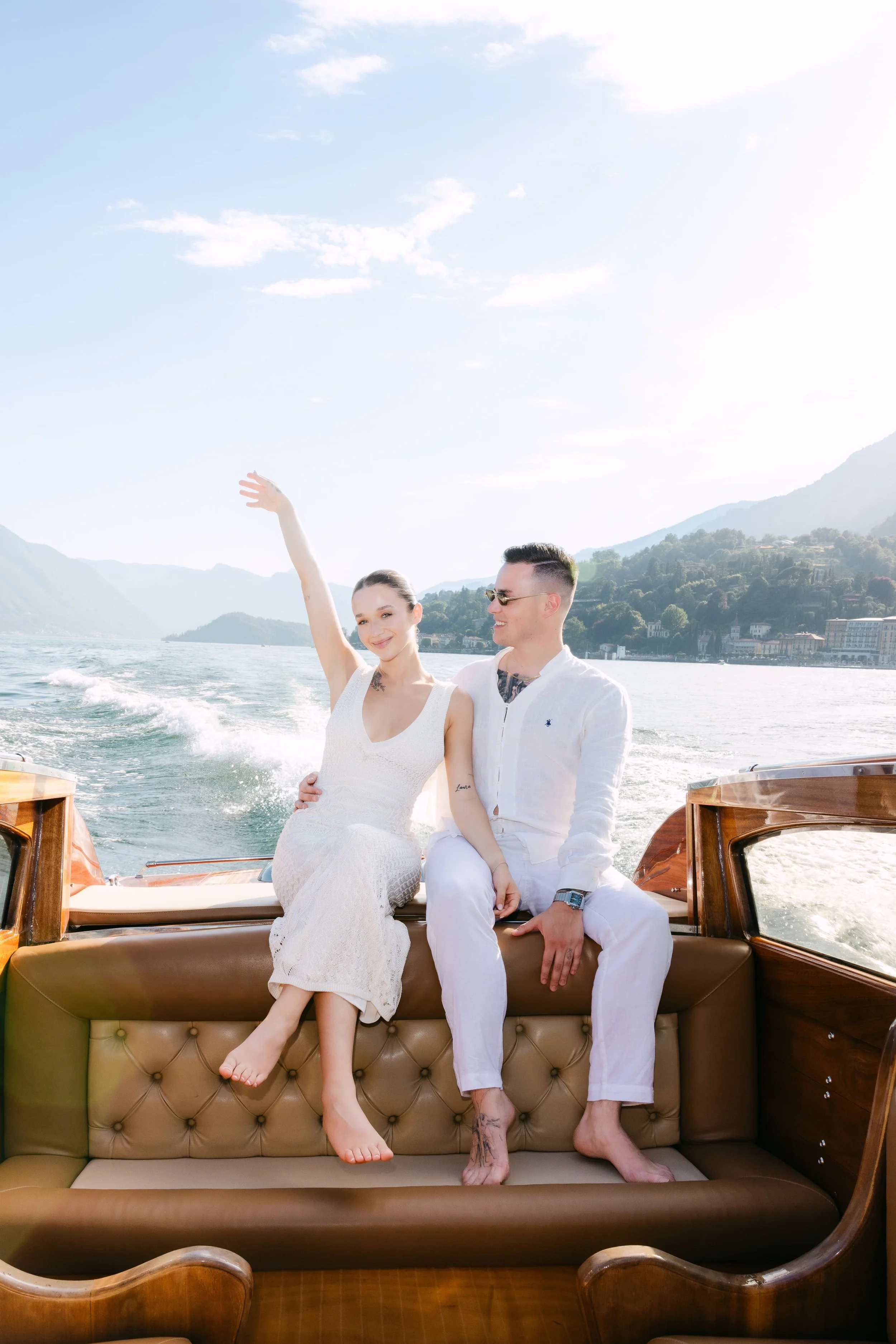
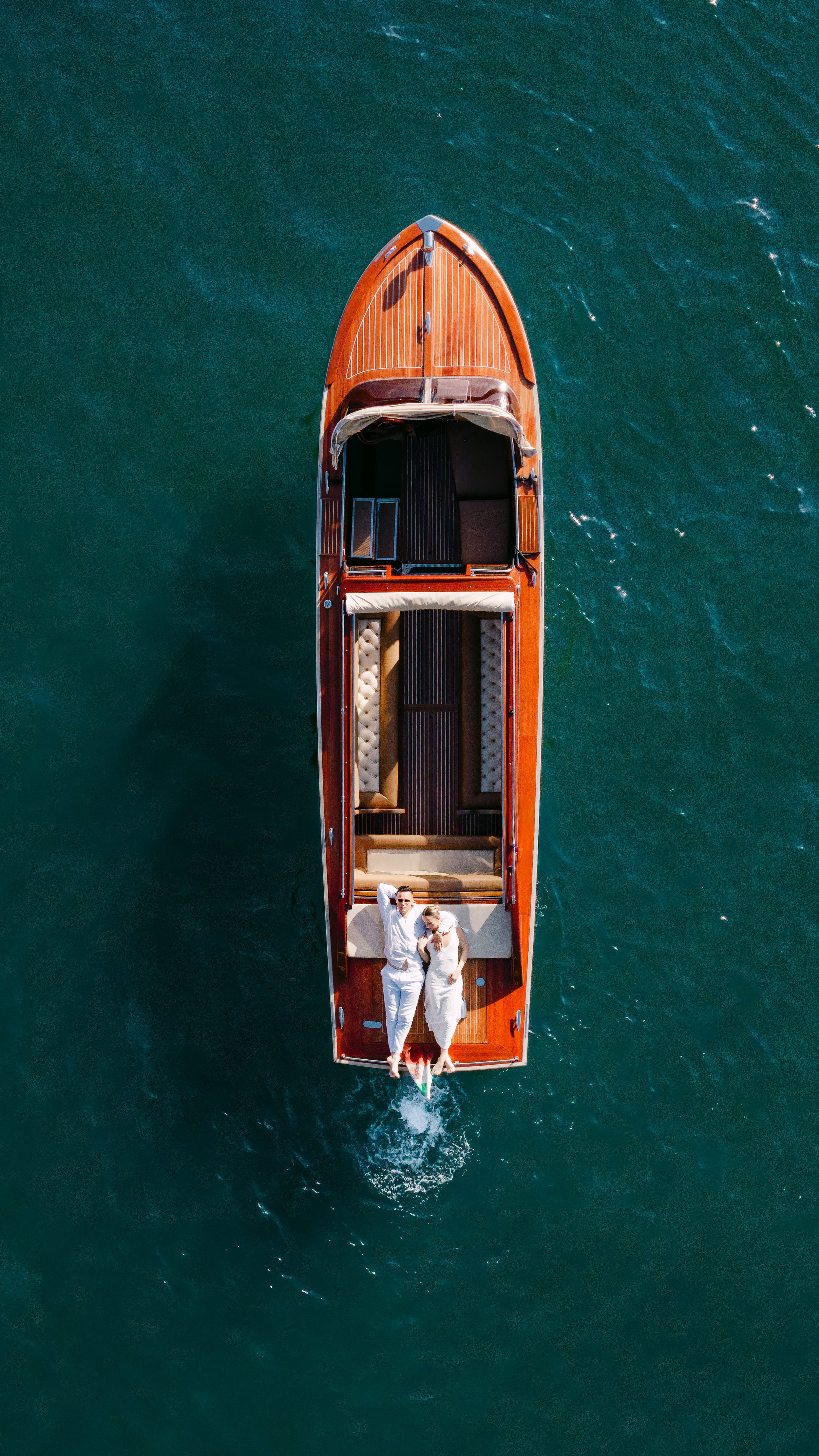
About an hour and a half after we started, our boat turned up, and we spent roughly the next hour and a half to two hours on the water.
It gave us a part of the lake we couldn’t reach any other way, and a completely different visual register from the gardens: villas along the shore, open water, distance. It also gave us open sky, which meant Mathys could put the drone up well away from the Villa Melzi grounds.
It was also, by a distance, the hardest part of the day for me, and I’d underestimated it. A boat never stops moving. Other boats leave wakes that arrive several seconds later, from directions you weren’t watching. The usable space on board is much tighter than boat photographs ever suggest, so there’s nowhere to brace and nowhere to step back. And I was working with a fairly heavy setup that wasn’t doing anything to help me on the stabilisation front.
The lesson isn’t “don’t do it.” The boat footage is some of the material I’m happiest with in the whole film. It’s that filming on water is not filming on land with a better background. It’s a different problem, and it needs to be planned for as one, in the schedule and in the kit.
Five hours that became eight
Back on shore we moved into the loosest part of the day: walking around, a small restaurant, sparkling wine, a beer, a pizza. They’d brought a bottle of champagne with them for the occasion. I’d also argue it was some of the best pizza I’ve eaten, though I accept that six hours of Italian sunshine may have influenced my judgement.
That final section ended up more compressed than I’d imagined it, because everything before it had taken longer than planned. We’d scheduled around five hours. We finished at roughly eight in the evening.
I didn’t stop at the five-hour mark, because I wanted to finish the ideas we’d planned and because I cared about this one more than was strictly professional. But I don’t offer that as a virtue, and I wouldn’t build a plan around it. The real lesson is the boring one: at Lake Como, moving between places costs more time than being in them. If I were planning this again, I’d cut an idea rather than compress every remaining one. A rushed location gives you nothing, and it shows on people’s faces.
Chips, beer, and three laptops
We drove back towards Milan properly exhausted, stopped for crisps and beer, and then, instead of sleeping, opened our laptops.
Elsa and I had both spent the afternoon half-blind in the sun. There was a question none of us had said out loud yet: did we actually get it?
The images were there. The focus was there. The drone footage was there. And that was the moment the day ended, somewhere around a hotel table covered in crisp packets.
The edit, and a piece of music I nearly didn’t use
I didn’t choose the music before filming. I almost never do. I want the material to tell me what it is first.
Then I spent something like an hour and a half searching for the track, which is a long time to spend not editing. I had everything else: the couple, the drone footage, establishing shots, hands, looks, the boat, the lake. What I didn’t have was a rhythm to hang it on.
The couple had asked for something more explicitly romantic. What I ended up choosing was “Papa Loves Mambo” by Perry Como.
I was nervous about it. It’s not the string-led direction they’d described, and it’s not what the reference films they’d sent were doing. But their day hadn’t been solemn. It had been hot, funny, slightly chaotic, full of two people teasing each other on a boat. The track felt Italian, playful and alive in a way that matched the people I’d actually spent the afternoon with, rather than the couple I might have imagined beforehand.
Perry Como. Lake Como. I only noticed while writing this article, months after delivering the film. Completely accidental, and I’d love to claim otherwise.
There was one image the couple had specifically asked for, and it survived every version of the edit: a top-down drone shot over the water and the boat, with the wedding date appearing as the frame opens out.
They approved the film in one pass. No structural revisions, no round of notes. Maddalena’s message came back with, among other things: “We love it, especially the musical style.” She said it didn’t sound like the films they kept seeing elsewhere, that it felt playful, and that although they’d originally pictured something more romantic, seeing the result changed their minds.
That’s the part I’d point to if someone asked what hiring a filmmaker is actually for. Not that I made something unique. Everyone claims that. That I made a judgement they hadn’t asked for, in the one place I was most exposed, and it turned out to be the thing they liked most.
The film they received runs about a minute and a half.
Watch the Lake Como Save the Date Film
Here is the final Save the Date film we created for Maddalena and Alberto on Lake Como.
Planning your own Lake Como pre-wedding film
Some of this comes from what I’d do differently, which is usually more useful than what went well.
Plan fewer ideas than you want. We combined a formal garden, a boat and a lifestyle sequence in one afternoon, and even running three hours over, the last part got squeezed. Two strong locations properly filmed will beat four half-filmed ones every time.
Treat the transfers and the boat as part of the shoot. They’re not the gaps between the real work; on our day they were a substantial share of it. Put them in the schedule as blocks with actual durations.
Sort out access before you sort out anything else. If you want a specific villa or garden, its rules will shape your day more than your moodboard will. Fees, opening hours, whether you can use the images commercially, whether a drone is allowed: all of that needs answering first, because it determines what’s even possible.
Assume the light will be a factor. Ours was relentless, and pale stone under a June sun is genuinely hard to work with. That’s not a reason to avoid summer; it’s a reason to know it’s coming.
Wear something you can move in. Everything good in the film came from walking, sitting down, getting on and off a boat. Fabric that moves is worth more on camera than fabric that only works standing still.
Give yourself a little time to settle. Maddalena and Alberto weren’t used to being filmed, and the first stretch is always the most self-conscious. Walking and talking to each other got them there quickly. Within a fairly short time they’d stopped performing for us and started behaving like themselves, which is when the useful material begins.
FAQ
How much time should you plan for a Lake Como pre-wedding film?
It depends entirely on how many locations you want and how far apart they are. For reference: we planned around five hours to cover the gardens at Villa Melzi, a boat session and a lifestyle sequence, and we finished closer to eight. There’s no universal number, but if your list includes a boat, budget generously.
Is a boat worth it?
Visually, yes: it gives you the shoreline and the open water, which we couldn’t get any other way. Practically, it needs to be built into the schedule as a real block of time, and filming from a small moving boat is technically different from filming on land. Worth doing, not worth improvising.
Do you need permission to shoot at Villa Melzi?
Yes. Professional shoots have to be arranged with the gardens’ management in advance. At the time of our session the professional photography fee was €427 including VAT, the ticket covered the day during opening hours, and areas could not be reserved exclusively (the gardens stay open to visitors). Commercial use of the images requires a separate agreement. Check the current official conditions before planning.
Can you fly a drone at Villa Melzi?
Not inside the gardens: drones are prohibited there under the current rules. We flew ours elsewhere on the lake, away from the grounds. Rules vary by location and change over time, so verify for wherever you’re actually planning to fly.
Looking for a Lake Como wedding videographer?
I’ll be straightforward about this, because it matters: I filmed Maddalena and Alberto’s save the date on Lake Como. I haven’t filmed a full wedding there yet.
What that day gave me is a working understanding of what shooting on the lake actually involves: access, timing, water, light, and how much of the day disappears into moving between places. What it also gave me was the wish to come back for the thing a two-person shoot can’t offer: guests, families, a day with its own momentum.
The save the date turned out not to be a standalone job. It was the first chapter with this couple. I’m filming their wedding in Italy in May 2027, not on Lake Como, but in Italy, with the same two people, which is a rarer kind of continuity than it sounds.
I’m a documentary wedding filmmaker based in Paris, working across France and internationally. I follow days rather than direct them, with just enough direction to let people be themselves on camera. If you’re planning a wedding, a pre-wedding film or a save the date on Lake Como, or anywhere in Italy, tell me about it.
Credits
Photography: Elsa Daniel, editorial & destination wedding photographer (Instagram)
Film: Caio Coelho Films
Drone & behind the scenes: Mathys
Boat: Lake Como Boat, Classic Boat Angelina
Location: Giardini di Villa Melzi d’Eril, Bellagio
Planning something on Lake Como? Tell me the date, the place, and what you have in mind. I’ll tell you honestly whether I’m the right person for it.
Get in touch → See the films →